 Omar Mashharawi
Tools / II · In the browser · Free
Steel section weight.
Structural steel is specified by section and invoiced by the kilo. Pick a family, pick a size, set a length: the weight per metre, per piece, and per order follows. Nothing is looked up from a stored weight, every figure is computed from the section's own dimensions. This is the browser version of my offline app, and it uses the same tables and the same formulas.
Section type
Method
Subtracts the wall from the outside dimension: geometrically exact.
Unverified data: the dimensions for this family have not yet been checked against an official reference table. Verify before relying on a figure for a quote or a purchase.
- Mass per metre
- 0kg/m
- Per piece
- 0kg
- Pieces per tonne
- 0pcs
- Weight of this quantity
- 0tonnes
Commercial weight
±4.0% is the tolerance on mass that EN 10034 sets for I and H sections, against a density of 7.85 kg/dm³. Channels and angles are governed by their own standards (EN 10279, EN 10056-2), and a contract or a purchase order can name a different figure. Set the one your order is written against.
- Minimum, at −tolerance
- 0tonnes
- Nominal
- 0tonnes
- Maximum, at +tolerance
- 0tonnes
- Spread across the band
- 0tonnes
Order
Nothing added yet. Build a multi-size order and the totals appear here.
| Size | Length m | Pieces | kg | tonnes | Remove |
|---|---|---|---|---|---|
| Total | 0 | 0 | 0 | ||
The section tables could not be loaded, so no weight can be computed here right now. Reload the page, or use the offline app.
m = A × 7,850 kg/m³ Weight comes from the cross-sectional area of the nominal geometry, not from a stored figure: flanges and web plus the root fillets for a beam, legs less the overlap for an angle, the annulus for a pipe. Dimensions for beams, channels and angles follow EN 10365 and EN 10056. A UPN flange tapers, and the formula treats it as one flat average thickness, which puts the channel family about 2% above the published UPN masses; bar and flat sizes are common market sizes and are marked with an asterisk until they are checked against an official table. These are nominal weights. What a mill delivers falls inside the tolerance band of the governing standard, and where it falls inside that band is a commercial question. I wrote about that here.
Common questions
How is the weight of a steel section calculated?
From the cross-sectional area of the nominal geometry multiplied by a density of 7,850 kg/m³: flanges and web plus the root fillets for a beam, the two legs less their overlap for an angle, the ring for a pipe. Nothing is read from a stored weight table.
Which sections and standards are covered?
IPE, HEA, HEB and UPN beams and channels, equal and unequal angles, round, square and hex bars, flats, pipe and tube. Beam, channel and angle dimensions follow EN 10365 and EN 10056.
Why can a result differ slightly from a published table?
A UPN flange tapers, and the formula treats it as one average thickness, which puts channels about 2% above the published UPN masses. Bar and flat sizes are common market sizes and are marked with an asterisk until they are checked against an official table.
What is the commercial weight band?
The nominal weight answers what a section weighs; the band answers what will be delivered and invoiced. The default is ±4%, the tolerance on mass EN 10034 sets for I and H sections. Channels and angles are governed by other standards (EN 10279, EN 10056-2), and a contract can name a different figure, so the tolerance can be changed.
Is there an offline version?
Yes. The same calculator runs as an iPhone app, Steel Section Calculator on the App Store, with the same tables and formulas.
Can I print or save the result?
Yes. Build an order line by line, then copy the table or use Print / PDF to save a dated sheet with the inputs, figures and totals.
The same calculator runs offline as an iPhone app — support and privacy. For reinforcing bar by diameter, use the rebar calculator.
Rebar supply · Al Rajhi Steel
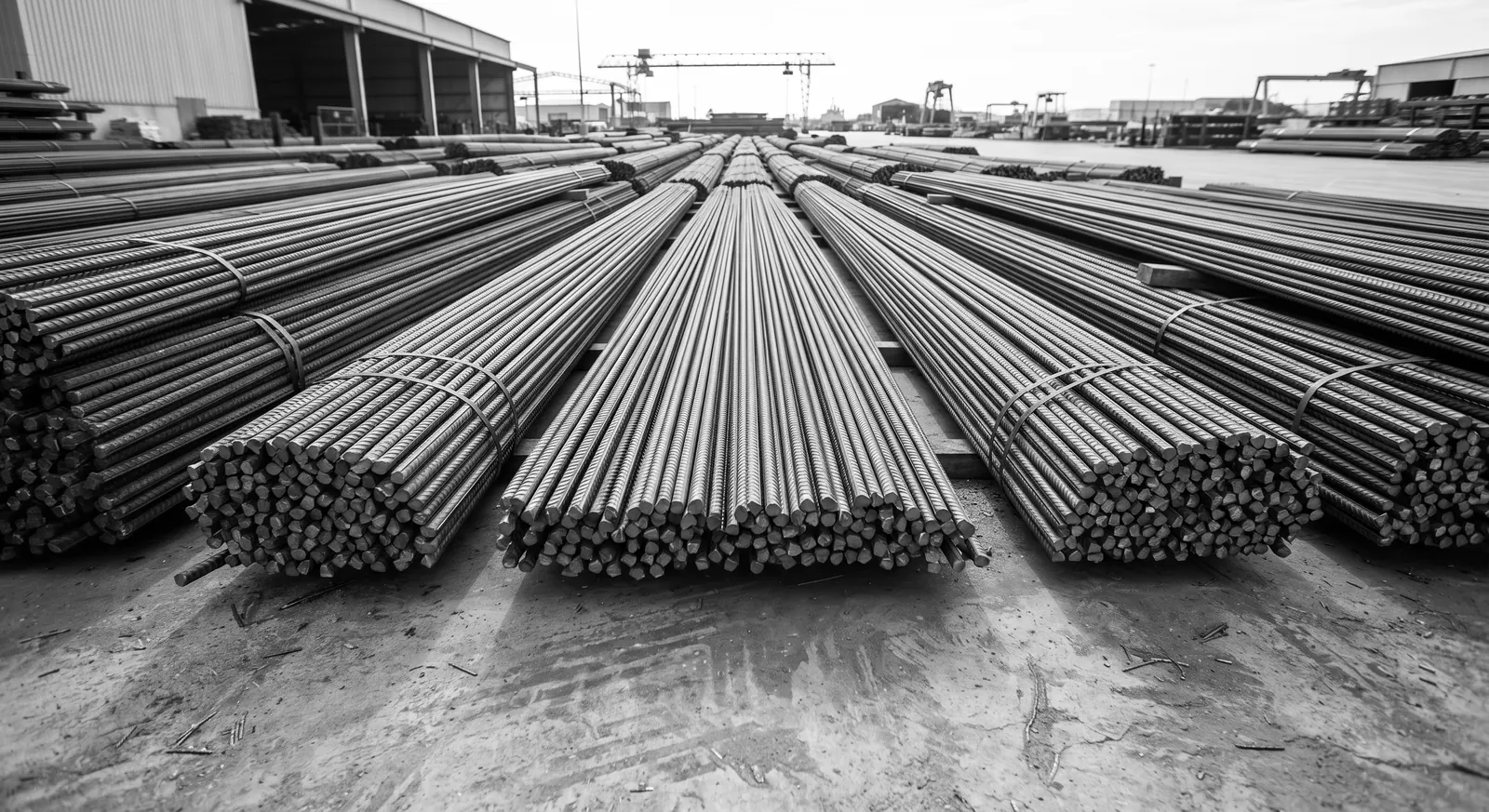
Need reinforcing steel for a project?
I am a Section Head at Al Rajhi Steel. Send me the sizes and quantities, or the bar bending schedule, and I will come back with a quotation.
- 10 to 32 mm · 12 m bars
- Grade 60 and Grade 80
- Cut to length
- Epoxy coating
- Test certificates available
- Immediate delivery after payment or LC opening
- Riyadh · Jeddah · Qassim · Taif
- Shipping across Saudi Arabia